 The Physiotherapy
What is sciatica?
Sciatica isn't a diagnosis in itself. It describes pain along the path of the sciatic nerve, which runs from the lower back through the buttock and down the leg. The most common cause is a disc bulge or herniation (often called a "slip disc") at the L4–L5 or L5–S1 level, pressing on or irritating a nerve root. Less often it comes from narrowing of the spinal canal or a tight piriformis muscle in the buttock.
Typical symptoms
- Pain that travels below the knee, often worse than the back pain
- Tingling, pins and needles or numbness in the leg or foot
- Pain that gets worse with sitting, coughing or sneezing
- Usually on one side only
Warning signs: see a doctor the same day
- Problems passing urine or controlling your bladder or bowels
- Numbness in the saddle area (between the legs, inner thighs)
- Sciatica in both legs at once
- Foot drop or leg weakness that is getting worse
These can signal cauda equina syndrome, which is a medical emergency.
Will it get better?
For most people, yes. Many cases of disc-related sciatica improve significantly within 6 to 12 weeks with the right care, and disc bulges can shrink over time. Surgery is usually considered only when there is serious or worsening nerve weakness, or when pain stays severe despite good conservative treatment.
How physiotherapy treats sciatica
- Finding your relief position. Many disc problems ease with specific movements, such as gentle back extensions. Your physiotherapist will test which direction reduces your leg pain.
- Nerve gliding exercises to help the irritated nerve move freely.
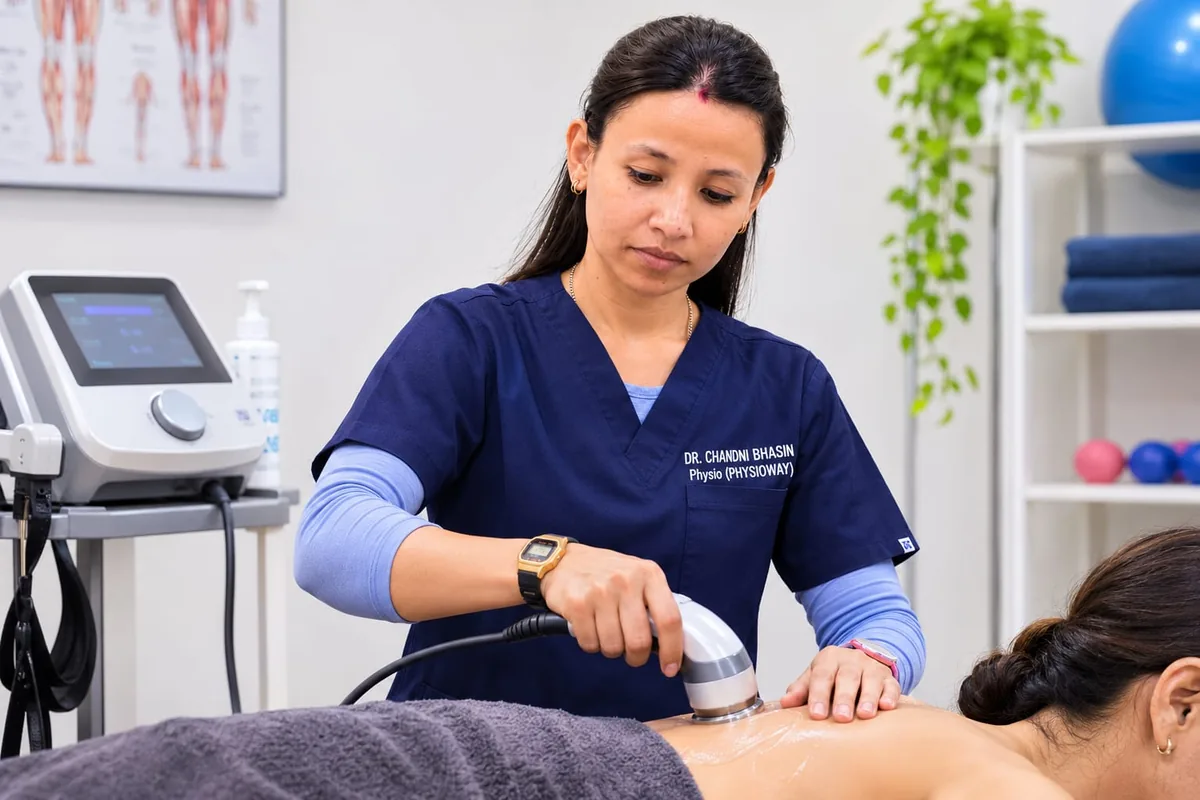
- Hands-on therapy and pain-relief modalities like TENS during a flare-up.
- Core and hip strengthening once pain settles, so the disc is better protected.
- Daily-life advice on sitting, driving, sleeping and lifting.
Do's and don'ts during a flare-up
- Do keep walking in short bouts. Movement helps the nerve recover.
- Do break up sitting every 20 to 30 minutes.
- Don't stay in bed for days.
- Don't force toe-touch hamstring stretches. They can pull on the irritated nerve.
- Don't lift heavy weights or twist with a load until your physio clears you.
Sciatica and slip disc treatment in Gurgaon at Physioway
If you're looking for the best physiotherapist in Gurgaon for sciatica or a slip disc, start with a proper assessment. At Physioway, our physiotherapy clinic in Gurgaon at Galleria Towers, DLF Phase 4, you're seen one-on-one by an experienced physiotherapist who finds the cause, explains it clearly and builds a plan around your work and routine.
Patients come to us from Sushant Lok, Golf Course Road, DLF Phases 1 to 5, Sector 28, Sector 43, South City, MG Road and Cyber City. Home physiotherapy is available in nearby areas for patients who can't travel. Call +91 99101 19075 to book.
Frequently asked questions
Do I need an MRI for sciatica?
Not always. Most sciatica is diagnosed from your symptoms and a physical examination. An MRI is usually needed only if there are warning signs, weakness, or if pain doesn't improve after several weeks of treatment.
Can a slip disc heal without surgery?
Yes. Many disc bulges and herniations improve on their own over weeks to months, and most people recover with physiotherapy, activity and time.
What is the best sleeping position for sciatica?
Lying on your back with a pillow under the knees, or on your side with a pillow between the knees, is comfortable for most people. Your physiotherapist can suggest what suits your case.
This article is general information to help you understand your condition. It is not a diagnosis. Please get a personal assessment from a physiotherapist or doctor before starting a new exercise programme, especially if your pain is severe or getting worse.